Export documents from Sri Lanka: which papers come as standard, and which must you ask for?
Truly Ceylon export team ·
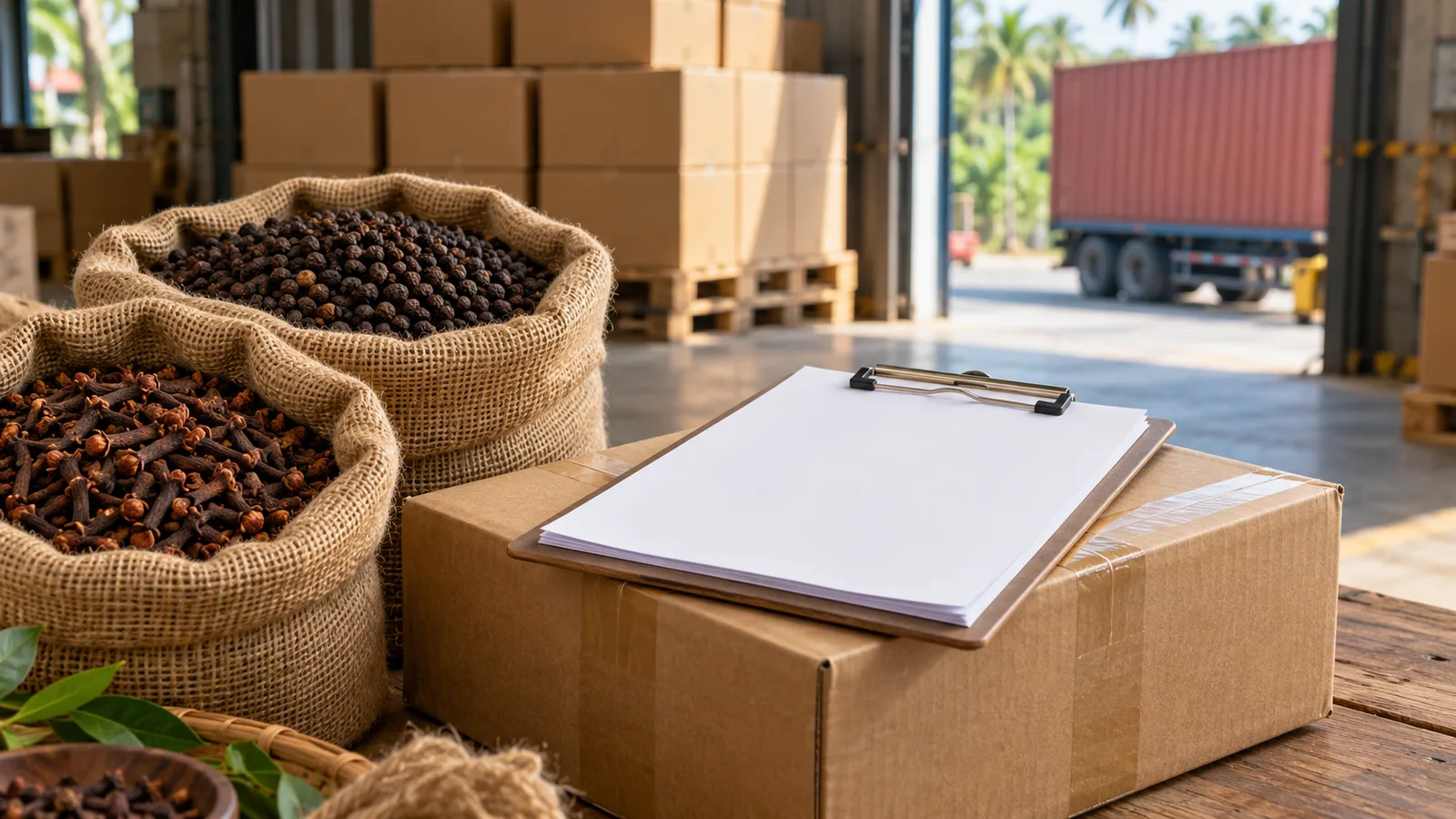
The export documents from Sri Lanka fall into two groups. A standard set is prepared for every commercial shipment: the commercial invoice, the packing list, the bill of lading or airway bill and, for the bank, a certificate of origin. A second group, which includes the phytosanitary certificate, the health certificate, quality and fumigation certificates and test reports, is supplied when the buyer asks for it. This checklist names each paper, the Sri Lankan office that issues it and when to request it.
The standard set: papers prepared for every shipment
The export procedure guide published by the Export Development Board in 2020 lists the shipping documents an exporter submits to the bank: the commercial invoice, the original bill of lading or airway bill, the insurance policy if the sale is on CIF, the bill of exchange if the sale is on D/P or D/A terms, the letter of credit, the certificate of origin or GSP certificate, and the packing list.
Three items on that list depend on your contract. D/P (documents against payment) and D/A (documents against acceptance) are the two forms of documentary collection: the buyer's bank releases the shipping documents after payment, or after the buyer accepts a term bill. A bill of exchange appears only under those terms, the letter of credit only if that is how you pay, and the insurance policy only on CIF.
The delivery term decides whether an insurance policy is in your set at all: our guide to the eleven Incoterms 2020 rules shows which rule puts insurance on the seller.
Before any of these exists, the exporter prepares a pro-forma invoice stating the product description, quantity, price, terms of payment, terms of delivery and packing and marking details. Every later paper should repeat it.
Sri Lanka's customs goods declaration is known as the CUSDEC, and the guide lists the documents filed with it as the commercial invoice, the packing list and, where applicable, permits or licences, tea blend sheets and a material safety data sheet. Sri Lanka Customs says either a Customs House Agent or the exporter can be the declarant, as set out on its page on exporting goods. You do not file it, but an error on the invoice is repeated on the declaration.
For tea, a blend sheet joins that list, and the district matters too: see our guide to the seven Ceylon tea regions and their elevations.
Document checklist: who issues what
| Document | Who prepares or issues it in Sri Lanka | Standard or on request | What to check as the buyer |
|---|---|---|---|
| Commercial invoice | The exporter | Standard | It repeats the pro-forma invoice line by line |
| Packing list | The exporter | Standard | Correct botanical names for plant products |
| Bill of lading | The shipping agent | Standard | Consignee, destination port and cargo description |
| Insurance policy | Procured by the seller | Only on CIF sales | Your contract names CIF |
| Certificate of origin | The Department of Commerce (preference schemes) or a chamber of commerce (ordinary certificate) | Name the type | The type your customs authority accepts |
| Phytosanitary certificate | The National Plant Quarantine Service | On request | Names and quantities match the packing list |
| Health certificate for food | The Food Control Administration Unit of the Ministry of Health | On request | It lists the parameters your country asks for |
| Quality certificate or test report | Accredited quality firms such as SLSI, ITI and SGS Lanka | On request | The specification it was tested against |
| Fumigation or pest control certificate | The plant quarantine service of the Department of Agriculture, or an approved private company | On request | The treatment your authority requires |
The on-request certificates, one by one
The guide says a quality certificate, health certificate, phytosanitary certificate, fumigation certificate, HACCP certification for food items and other certificates or test reports should be submitted when the buyer requests them.
To turn that list into questions for a food supplier, with the issuing body behind each answer, see what to ask a food supplier before a first order.
Herbal exports carry their own certificate questions too, including an export approval step most categories do not need: see our guide to herbal products from Sri Lanka.
Certificate of origin
The Department of Commerce issues certificates of origin under all GSP schemes, free trade agreements and multilateral trading agreements. Ordinary certificates of origin are issued by chambers such as the Ceylon Chamber of Commerce or the National Chamber of Commerce.
For exports to the EU, Norway, Switzerland and Turkey the Department of Commerce certificate no longer applies. Under the Registered Exporter (REX) system the exporter makes a Statement on Origin on the invoice or another commercial document, using a registration number in the format LKREX followed by the exporter's number. Ask for that statement instead.
An exporter must register once with the Department of Commerce before applying for preferential certificates, and exporters of spices and allied products are asked for extra documents at that stage. If you buy spices from Sri Lanka and want a preference certificate, ask early whether that registration is in place.
Spice buyers have an origin question of their own, for seed spices in particular: see which Sri Lankan spices have official grades and which need an origin check.
Phytosanitary certificate
A phytosanitary certificate is the exporting country's official plant health certificate. Sri Lanka's National Plant Quarantine Service says only authorised officers of the official plant protection service issue it, after plant quarantine officers inspect and sample the goods, and that it should be issued before dispatch.
The service asks the exporter for an application, a packing list or commodity list with correct botanical names and treatment certificates such as fumigation reports if needed. The certificate is issued in three copies in English only, and a fee is charged for each consignment. The requirements are on the National Plant Quarantine Service export page.
Health certificate for food
The Food Control Administration Unit (FCAU) of the Ministry of Health issues health certificates for exported food, and only to establishments registered with it. A factory inspection is a pre-requisite. For each consignment the unit asks for an application form, a sample of the product and analysis reports, and it usually tests a sample at a laboratory it recognises before issuing the certificate. The procedure is on the unit's page on export health certificates.
Two points matter if you buy packaged food and beverages. First, the unit says different countries request different parameters in the certificate and advises exporters to check the requirements with the importing agent, so send your list. Second, the unit certifies tea, coconut products, rice and rice-based products, cereals, spices and condiments and processed foods, but not fresh vegetables and fruits, which are certified by the Plant Quarantine Unit of the Department of Agriculture.
Quality certificates, test reports and fumigation
The guide says quality certificates are issued by accredited quality firms such as SLSI (the Sri Lanka Standards Institution), ITI (the Industrial Technology Institute) and SGS Lanka. State which standard or specification the report should test against.
A fumigation or pest control certificate may be required by buyers or governments for agricultural products. Fumigation is done by the plant quarantine service of the Department of Agriculture and by some approved private companies. Wood packaging is separate: the guide says it must be treated under the plant health standard ISPM 15, by heat treatment or fumigation with methyl bromide.
Checks and papers tied to one product
- Tea. Sri Lanka Tea Board officers inspect consignments of Ceylon tea that are ready for export to confirm they meet export standards.
- Desiccated coconut. The Export Development Board says each export shipment of desiccated coconut must be accompanied by a certificate from the Coconut Development Authority; name it in an order for coconut products.
- Organic goods. The guide says organic exports need an organic certificate (for example EU, USDA-NOP or JAS) from an accredited certification body. Organic imports into the EU also need an electronic certificate of inspection (e-COI), without which the goods are not released from the port of arrival.
What your own market adds
Your own authority decides which papers it wants, and some set conditions on them. The official guidance for Great Britain says that where a phytosanitary certificate is needed, the exporter must get one for each consignment, issued no more than 13 days before or after the date the consignment left the country of export.
These rules change. Confirm the current requirement with your customs broker or on the authority's own page before you order, and pass the list to the supplier.
How to make sure the right papers arrive
- Get the list from your side first. Ask your customs broker which certificates your authority needs for this product, and which origin document supports the tariff rate you expect.
- Put the list in the enquiry. Name each document, the scheme for the certificate of origin, the botanical name of any plant product and your destination port.
- Check the pro-forma invoice. Description, quantity, payment terms and delivery terms should read as you want them on the final papers.
- Write the documents into the contract. A letter of credit is a bank's written undertaking to pay against stipulated documents, so every paper it lists must be one the supplier can obtain.
- Request certificates before packing. Plant quarantine officers inspect and sample the goods before dispatch, and the Food Control Administration Unit usually tests a sample from the consignment before it issues a health certificate.
- Compare the set before you pay. Invoice, packing list, certificates and bill of lading should agree on description, quantity and consignee.
Common mistakes
- Assuming certificates come automatically. The on-request papers are supplied when the buyer asks, so name each one in the order.
- Writing "certificate of origin" and nothing else. A preference certificate, an ordinary chamber certificate and a REX Statement on Origin are three different things from three different sources.
- Using trade names on the packing list. The National Plant Quarantine Service asks for correct botanical names.
- Expecting an insurance policy on an FOB or CFR sale. Of the three sea rules the guide describes, FOB, CFR and CIF, only CIF obliges the seller to procure marine insurance.
- Forgetting the pallets. Ask whether the wood packaging is ISPM 15 compliant.
Frequently asked questions
Which export documents from Sri Lanka come with every shipment?
The commercial invoice, the packing list and the bill of lading or airway bill belong to every commercial shipment. The bank set in the export procedure guide adds a certificate of origin or GSP certificate, an insurance policy on CIF sales and a bill of exchange on D/P or D/A terms.
Who issues a phytosanitary certificate in Sri Lanka?
The National Plant Quarantine Service says only authorised officers of the official plant protection service issue it, after plant quarantine officers inspect and sample the goods. It should be issued before dispatch, so ask before the goods are packed.
Is a health certificate issued for every food shipment from Sri Lanka?
No. The export procedure guide lists it among the papers submitted when the buyer requests them. The Food Control Administration Unit of the Ministry of Health issues it only to establishments registered with the unit.
Do EU importers still receive a certificate of origin from the Department of Commerce?
No. For exports to the EU, Norway, Switzerland and Turkey that certificate no longer applies. Under the Registered Exporter (REX) system the exporter makes a Statement on Origin on the invoice or another commercial document, with a registration number that begins with LKREX.
Why does the HS code on the Sri Lankan invoice differ from the code my broker uses?
The Department of Commerce explains that all countries agree on an HS code up to the six-digit sub-heading, while national tariff lines of eight to ten digits can differ. Compare the first six digits and let your broker choose the code for your import declaration.
Once you have your broker's list, add it to the product, grade, quantity and destination port and send the enquiry through the Truly Ceylon how to order page. Ask which documents and certificates would accompany the shipment. General ordering questions are covered on the FAQ page.
Key takeaways
- The commercial invoice, packing list and bill of lading or airway bill are standard; the insurance policy and bill of exchange depend on your contract terms.
- Phytosanitary, health, quality and fumigation certificates and test reports are supplied when the buyer requests them, each from its own issuing office.
- For the EU, Norway, Switzerland and Turkey, origin is shown by a REX Statement on Origin on the invoice.
- Name every document in the enquiry and the contract, and request certificates before the goods are packed.
Sourcing from Sri Lanka?
Send us the product, quantity, packing and destination port for a written quotation.