Questions to ask a food supplier before ordering: which answers come with a certificate?
Truly Ceylon export team ·
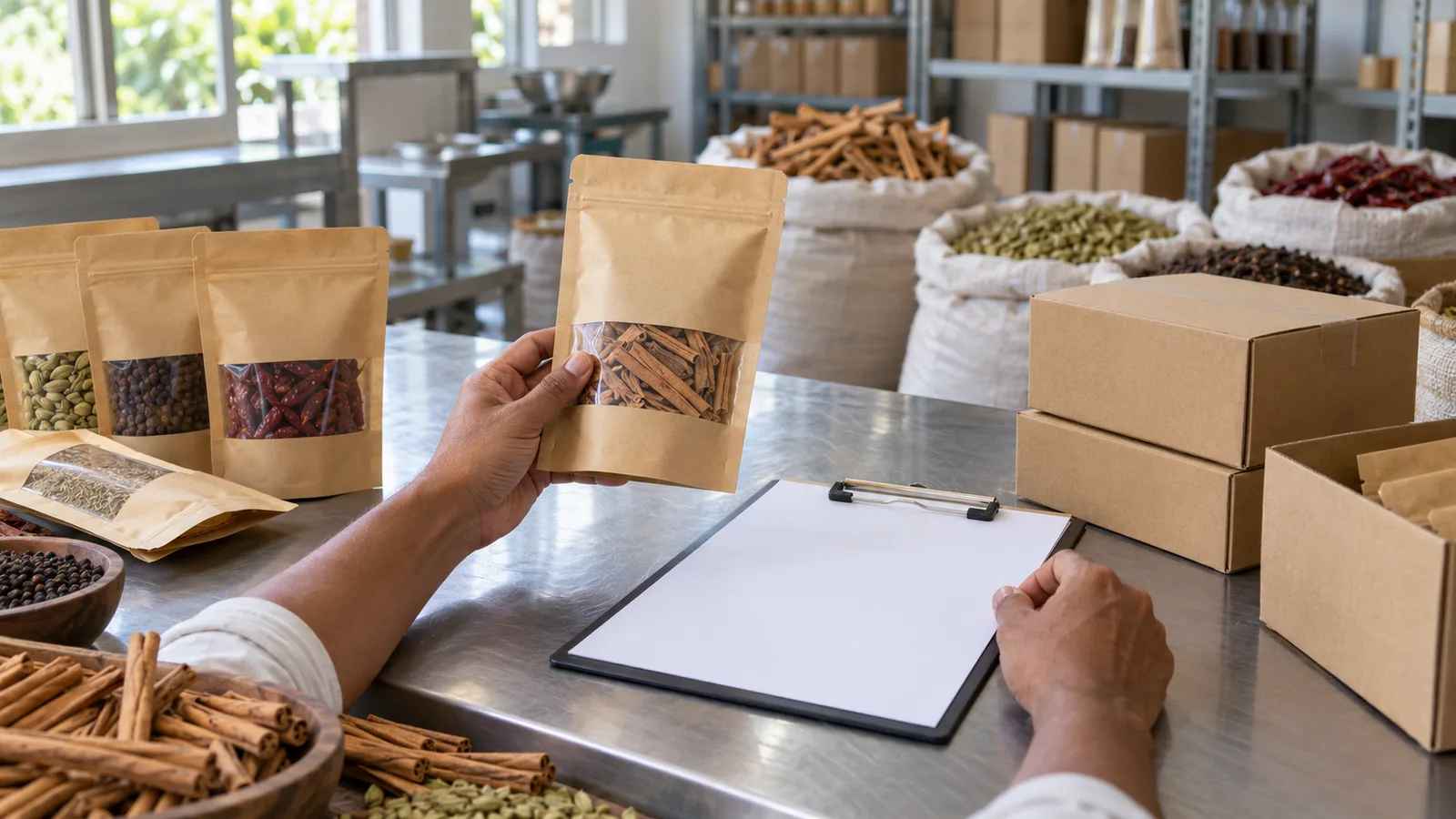
The questions to ask a food supplier before ordering are the ones whose answers you can check on paper. Before a first order from Sri Lanka, ask about four things: proof of quality for the factory and the lot, the packaging, what the label may say, and the documents your own customs authority will want. A spoken "yes" is not an answer. For every question below, this guide names the certificate, report or rule that turns the answer into something you can file and compare between suppliers.
Why a first order needs written answers
The Export Development Board's export procedure guide says the exporter prepares a pro-forma invoice for the buyer stating the product description, quantity, price, terms of payment, terms of delivery and packing and marking details. Anything you want to rely on later belongs in that document, or in the contract that follows it.
The same guide makes a point that surprises many new buyers: a quality certificate, health certificate, phytosanitary certificate, fumigation certificate, HACCP certification for food items and other certificates or test reports are submitted when the buyer requests them. They do not arrive by default. If a paper matters to you, ask for it by name in your first message.
The question list at a glance
Use the table as a checklist. The last column is the part you can verify.
| Question group | What to ask | What makes the answer checkable |
|---|---|---|
| Factory hygiene | Is the establishment registered with the Ministry of Health's Food Control Administration Unit (FCAU)? | The FCAU export health certificate, issued only to registered establishments |
| Lot quality | Which laboratory will test this consignment, and against which parameters? | A dated analysis report tied to your lot |
| Food safety system | Which food safety certificate does the factory hold, from which body, valid until when? | A copy you can check with the body that issued it |
| Organic status | Is the product certified organic for your market, and by whom? | A certificate from an accredited body; for the EU, an electronic certificate of inspection |
| Packaging | What are the inner pack, outer carton and pallet, and are wooden pallets ISPM 15 compliant? | A packaging specification written into the contract |
| Labels and origin marks | Who prints the label, and may the pack carry an official origin mark? | The licence behind the mark, from the body that owns it |
| Shipment documents | Which certificates will travel with this shipment? | The list agreed on the pro-forma invoice |
Quality proof: questions about the factory and the lot
Is the factory registered with the FCAU?
The Food Control Administration Unit of Sri Lanka's Ministry of Health issues health certificates for exported food, and only to establishments registered with it. A factory inspection comes first, and the unit may refuse certificates for food from factories that do not comply with the food hygiene regulations.
Which parameters will the health certificate state?
This is the question new buyers skip. The FCAU says different countries request different parameters in the health certificate, and advises exporters to check the requirements with the importing agent before exporting. The supplier expects you to say what your market needs, so ask your customs broker which parameters your authority checks and put them in the enquiry.
For each consignment the FCAU asks for an application form, a product sample, analysis reports and other relevant documents, and usually tests a sample at a laboratory it recognises before issuing the certificate.
Which laboratory will test my lot?
The EDB guide says quality certificates are issued by accredited quality firms such as SLSI, ITI and SGS Lanka. Ask which laboratory will test your consignment, and ask for a sample report to see the format. A report is evidence for the lot it names, not for last season's goods.
Some products need a specific test because of the destination. Under Annex I of Regulation (EU) 2019/1793, dried, roasted, crushed or ground peppers of the genus Capsicum from Sri Lanka are checked for aflatoxins at EU border control posts at a frequency of 50%. If you are buying bird's eye chili powder for the EU, ask for an aflatoxin result on your lot.
Pesticide residues are the other common test. The EU sets maximum residue levels under Regulation EC 396/2005, with a default level of 0.01 mg/kg where a pesticide is not specifically listed. Ask which residues the laboratory screens for, not only whether the product "passed".
Leaf powders deserve the closest look here. Our guide for buyers of moringa powder in bulk shows how to set the residue reference in the order.
The papers to ask for also change with the product. Our buyer guide to dehydrated fruit suppliers in Sri Lanka lists the specs, reports and certificates for dried fruit, and our guide to Sri Lankan spices wholesale explains which grade name should appear on a spice offer.
Which food safety certificate does the factory hold?
The EDB's food and beverage sector report of 2021 says the majority of Sri Lankan processed food exporters have obtained ISO 22000, HACCP, BRC, Kosher or organic certificates. That describes the sector, not your supplier. Ask for the certificate itself, the certification body, the scope (which products, which site) and the expiry date.
Organic needs extra care. The EDB guide says organic exports need a certificate such as EU, USDA-NOP or JAS from an accredited certification body, plus compulsory registration with the National Organic Control Unit at the EDB. Every organic import into the EU also needs an electronic certificate of inspection issued through TRACES, or it is not released at the port of arrival.
Packaging questions to settle before the pro-forma invoice
The EDB guide says packages should resist rough handling in sea or air transport, be packed to the buyer's requirements in the trade contract, and carry the shipping marks and the port of destination. It suggests writing packaging specifications into the contract to avoid disputes. Ask about:
- Inner pack: the material that touches the food, and whether it meets your market's food contact rules.
- Outer carton: inner packs per carton and how the cartons are marked.
- Pallets: wooden packaging in international trade must be heat treated or fumigated with methyl bromide under ISPM 15, the International Plant Protection Convention standard for wood packaging. Ask for compliant pallets, or none.
- Fumigation: buyers or governments may require a fumigation certificate for agricultural products. Check whether yours does.
- Shipping marks: send the marks you want, including your reference and destination port.
Labelling and private label: what the pack may say
Selling under your own brand (private label)? Settle early who prints the retail label, in which language and format, and who checks the wording.
Origin marks are where Sri Lankan rules reach your pack. The "Pure Ceylon Cinnamon" logo is a certification mark owned by the EDB, used only under an EDB licence on value-added cinnamon packs containing 100% Pure Ceylon Cinnamon manufactured in Sri Lanka. The Sri Lanka Tea Board's Lion logo may only be used on tea packed in Sri Lanka, so an overseas packer cannot print it. If a mark matters to you, ask to see the licence behind it and confirm the goods will be packed in Sri Lanka.
Names carry rules too. The EDB says tea described as Ceylon Tea must be grown and made entirely in Sri Lanka and cannot be blended with tea from elsewhere. In the EU, Article 2 of Regulation (EU) 2022/144 says that when the botanical name Cinnamomum zeylanicum appears on the label of a product from outside Sri Lanka, the country of origin must be shown in the same field of vision.
Herbal drinks and powders need one more question. The EDB says herbal finished products must be approved by the Drug Formulatory Committee appointed under the Department of Ayurveda before they are sold locally or exported. If you are sourcing from the herbal products category, ask whether that approval covers the product. Keep the label to what the product is: the FDA treats a product represented for the treatment, prevention or cure of a disease as a drug.
Document questions for your market
Your market decides which papers the shipment needs, and some duties sit with you, not the supplier.
- United States: the FDA says it does not approve individual food importers, products, labels or shipments, but the facilities that produce, store or handle the food must be registered with it. Ask for the facility's registration. Under the Foreign Supplier Verification Programs rule, you as the importer verify the supplier.
- European Union: listed plant products need a phytosanitary certificate from Sri Lanka's National Plant Quarantine Service, issued before dispatch after its officers inspect the goods.
- Great Britain: where a phytosanitary certificate is needed, it must be issued no more than 13 days before or after the consignment left Sri Lanka.
Rules change, so confirm each requirement with your customs broker or the authority's own page before ordering. For which papers come with every shipment and which you must request, see our guide to export documents from Sri Lanka.
If this is your first shipment into a new market, our guide to importing Sri Lankan food under your destination's rules explains why the destination, not the product, decides most of the paperwork. Read it before you write the document questions into your enquiry.
How to send the questions with your first enquiry
- Pick the product and its exact form from the food and beverages category.
- Ask your customs broker which certificates, test parameters and label rules apply to that product in your market.
- Write one enquiry listing the product, quantity, pack size, destination port, Incoterms rule and every document and test report you need.
- Ask for the specification sheet, a sample report and copies of any food safety or organic certificates.
- Test a product sample against the specification before you discuss volume.
- Check that the pro-forma invoice repeats the agreed packing, marking and document list before you confirm.
Common mistakes
- Accepting "we have all certificates" instead of asking for each one by name, with its issuing body and expiry date.
- Reading a statement about the sector as a claim about one supplier.
- Leaving the health certificate parameters to the supplier, when the FCAU expects the importer's side to state them.
- Agreeing on packaging by phone, so the carton, pallet and marks never reach the contract.
- Printing an origin mark or a Ceylon name on a pack packed or blended outside Sri Lanka.
Frequently asked questions
What should I ask a food supplier before placing a first order?
Ask for proof in four areas: the factory's hygiene registration and food safety certificates, test reports for your lot, the packaging specification, and the documents your market needs. Ask for each paper by name, because certificates and test reports are submitted when the buyer requests them.
Who issues the health certificate for food exported from Sri Lanka?
The Food Control Administration Unit of the Ministry of Health, and only to establishments registered with it after a factory inspection. Fresh fruit and vegetables are certified by the Plant Quarantine Unit of the Department of Agriculture instead.
Can a supplier's food safety certificate be checked?
Yes. Ask for a copy showing the certification body, the scope and the expiry date, then confirm it with the body that issued it. Check that the scope covers the product and the site that will make your order.
Can I put the Lion logo on tea I pack in my own country?
No. The Sri Lanka Tea Board's Lion logo may only be used on tea packed in Sri Lanka, so an overseas packer cannot print it even when the contents are wholly Sri Lankan tea.
When your question list is ready, send it with your product, quantity and destination through the how-to-order page, and ask for the specification sheet and sample report in the same message so every answer comes back in writing.
Key takeaways
- Ask questions whose answers come with a certificate, a report or a rule you can check.
- Certificates and test reports come when you request them, so name each one.
- Tell the supplier which health certificate parameters and tests your market needs.
- Write the packaging specification, pallets and shipping marks into the contract.
- Origin marks and Ceylon names have their own rules; confirm label wording with your regulator.
Sourcing from Sri Lanka?
Send us the product, quantity, packing and destination port for a written quotation.