Herbal products from Sri Lanka: what you can specify, and what you cannot claim
Truly Ceylon export team ·
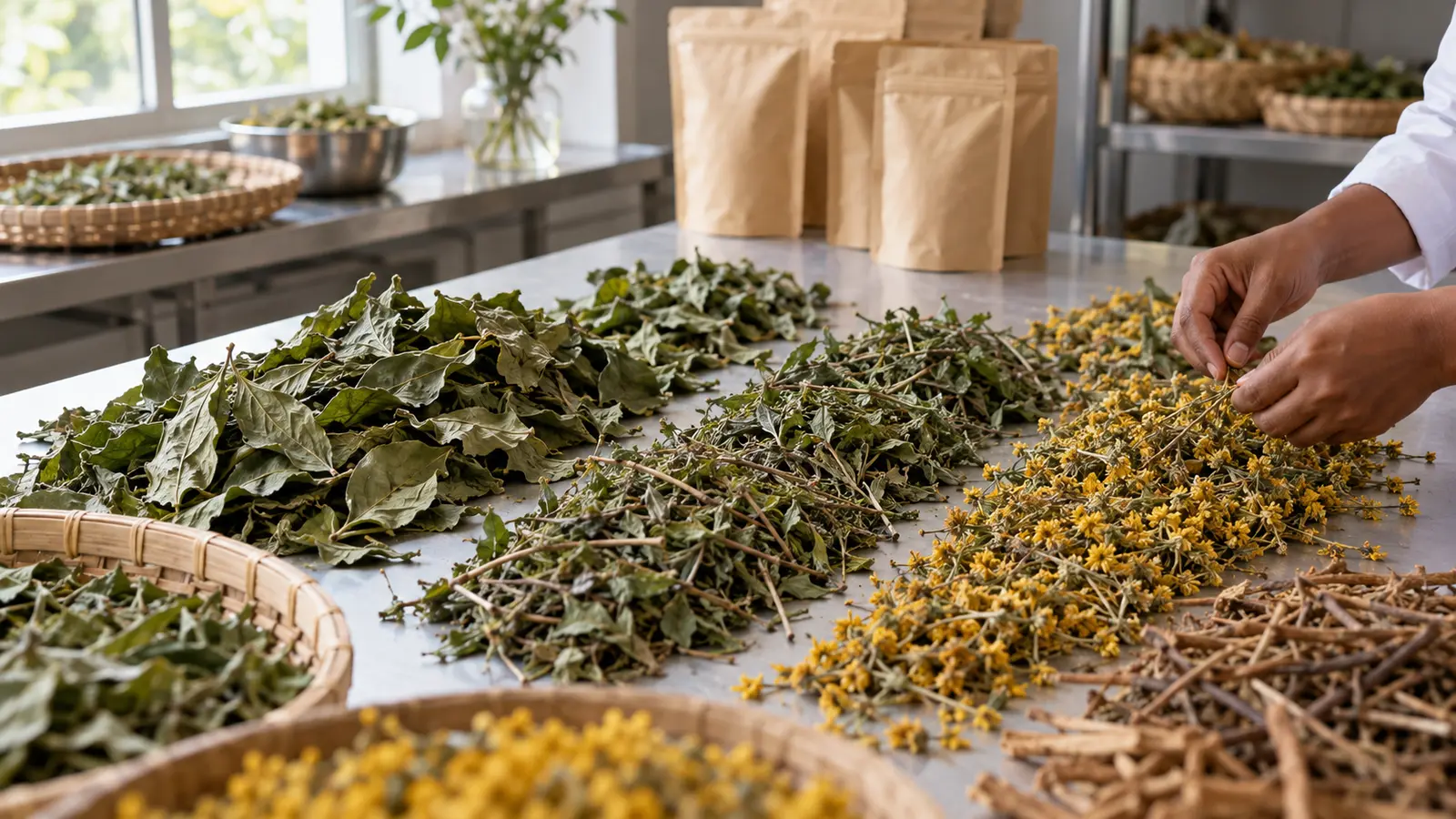
Several Sri Lankan herbal drinks have a long history of everyday use, but what you can say about them in your own market depends on an approval step at origin and your own country's claim rules, not on how traditional the drink is. Before you specify an order, it helps to know which drinks you are actually choosing between and what paperwork sits behind each one.
| Herbal drink | Plant or source | Traditional preparation |
|---|---|---|
| Ranawara | Cassia auriculata (the flower of the plant) | Herbal tea, widely used by Sri Lankans for generations |
| Polpala-based tisane | Aerva lanata | Among Sri Lanka's most consumed tisane mixtures |
| Iramusu | A traditional root ingredient | Still brewed into herbal tea in Sri Lanka |
| Moringa | Moringa oleifera, the drumstick tree | Leaves boiled to make moringa herbal tea |
Herbal tea as a traditional beverage category
The Export Development Board describes herbal tea, or tisane, as having a long history as a Sri Lankan traditional beverage. That history is part of why buyers ask about these drinks, but it is not, on its own, a specification: each named drink above is a separate plant and a separate product to order.
The approval step before export
The Export Development Board says herbal finished products must be approved by the Drug Formulatory Committee, appointed under the Department of Ayurveda, before they are sold locally or exported. Ask your supplier for confirmation of this approval for the specific finished product you are ordering, not just for the category of herbal drinks in general.
Where the raw material should come from
The Export Development Board says medicinal plants for export should come from the exporter's own cultivation, or from controlled out-grower or community grower systems, and that the Department of Forest and the Department of Ayurveda have regulations to prevent the export of wild collections. If a supplier cannot describe where their raw material comes from, that is a specification gap worth closing before you order.
Certificates to ask for
The Export Development Board says a quality certificate for herbal exports can come from the Sri Lanka Standards Institution or SGS, analysis certificates for herbal extracts, spices, essential oils and natural products from the Industrial Technology Institute (ITI), and a phytosanitary certificate from the plant quarantine office. Ask for the specific certificate types relevant to your shipment, since a quality certificate and an analysis certificate answer different questions about the same product.
Where traditional use ends and a health claim begins
Describing a drink's traditional use is different from making a claim about what it does to the body. The FDA says a product represented, explicitly or implicitly, for the treatment, prevention or cure of a specific disease is treated as a drug, not a dietary supplement. That principle is a useful test for any market: once your own labelling or marketing claims to treat, prevent or cure a condition, you have moved from describing a traditional beverage into a different regulatory category entirely, with different rules to meet.
Moringa leaf powder raises the same question in bulk form: see buying moringa powder from a bulk supplier for the papers, residue limits and label wording that decide whether it is sold as a food or a supplement.
- Name the exact plant or drink you want: ranawara, polpala-based tisane, iramusu or moringa are separate products, not interchangeable terms for "herbal tea".
- Ask whether the specific finished product has been approved by the Drug Formulatory Committee under the Department of Ayurveda.
- Ask where the raw material comes from: cultivation or a controlled out-grower or community grower system, not a wild collection.
- Request the certificates relevant to your shipment: a quality certificate (SLSI or SGS), an analysis certificate (ITI) where relevant, and a phytosanitary certificate from the plant quarantine office.
- Check your own market's rules on health claims before you finalise any label or marketing copy, since describing traditional use and making a treatment claim are not the same thing.
Where to see the specific products
If you already know which drink you want, go straight to the product listing rather than the general category: our ranawara herbal drink and moringa tea bags pages, among others, each carry their own specification details. Naming the exact listing in your enquiry saves a round trip compared with asking for "herbal tea" and waiting to be asked which one you mean.
Keeping your certificates and documents in order
Herbal products sit alongside Sri Lanka's other export categories when it comes to paperwork discipline. Our guide to export documents from Sri Lanka covers which papers come as standard and which you need to request specifically, a useful companion once you have your herbal certificates in hand.
Common mistakes buyers make
Treating "herbal tea" as one product, when ranawara, polpala, iramusu and moringa are separate plants with separate sourcing and approval questions. Assuming a traditional beverage needs no export approval, when finished herbal products must be approved by the Drug Formulatory Committee before sale or export. Not asking where the raw material comes from, when regulations specifically exist to prevent wild-collected material being exported. Drafting label or marketing copy that implies a treatment or cure, which moves the product into a different regulatory category in markets such as the United States.
Frequently asked questions
What is ranawara?
Ranawara is a herbal tea made with the flower of Cassia auriculata, and it has been widely used by Sri Lankans for generations.
Is polpala the same thing as iramusu?
No. Polpala (Aerva lanata) is used in one of Sri Lanka's most consumed tisane mixtures, while iramusu is a separate ingredient still brewed into herbal tea; both are traditional but distinct products.
Do finished herbal products need approval before export?
Yes. The Export Development Board says herbal finished products must be approved by the Drug Formulatory Committee, appointed under the Department of Ayurveda, before they are sold locally or exported.
Why does it matter where the raw material comes from?
Medicinal plants for export should come from cultivation or a controlled out-grower or community grower system; the Department of Forest and the Department of Ayurveda regulate against the export of wild collections.
Which certificates should I ask for on a herbal order?
A quality certificate from the Sri Lanka Standards Institution or SGS, an analysis certificate from the Industrial Technology Institute where relevant, and a phytosanitary certificate from the plant quarantine office.
Can I describe a herbal drink as treating a health condition?
Be careful: in the United States, the FDA treats a product represented for the treatment, prevention or cure of a specific disease as a drug, not a supplement, and other markets apply similar lines between traditional-use description and a health claim.
Ready to specify an order, or still comparing which herbal drinks fit your range? Send the details through our quote request page and we can talk through the sourcing and certificates for the specific products you have in mind.
Key takeaways
- Ranawara, polpala-based tisane, iramusu and moringa are separate traditional Sri Lankan herbal drinks, not one interchangeable category.
- Finished herbal products must be approved by the Drug Formulatory Committee under the Department of Ayurveda before local sale or export.
- Raw material should come from cultivation or a controlled grower system, not wild collection.
- Ask for a quality certificate (SLSI or SGS), an analysis certificate (ITI) and a phytosanitary certificate as relevant to your order.
- Describing traditional use is not the same as making a treatment claim; check your own market's rules before finalising labels or marketing.
Sourcing from Sri Lanka?
Send us the product, quantity, packing and destination port for a written quotation.