Importing from Sri Lanka for the first time? Name every paper before the goods are packed
Truly Ceylon export team ·
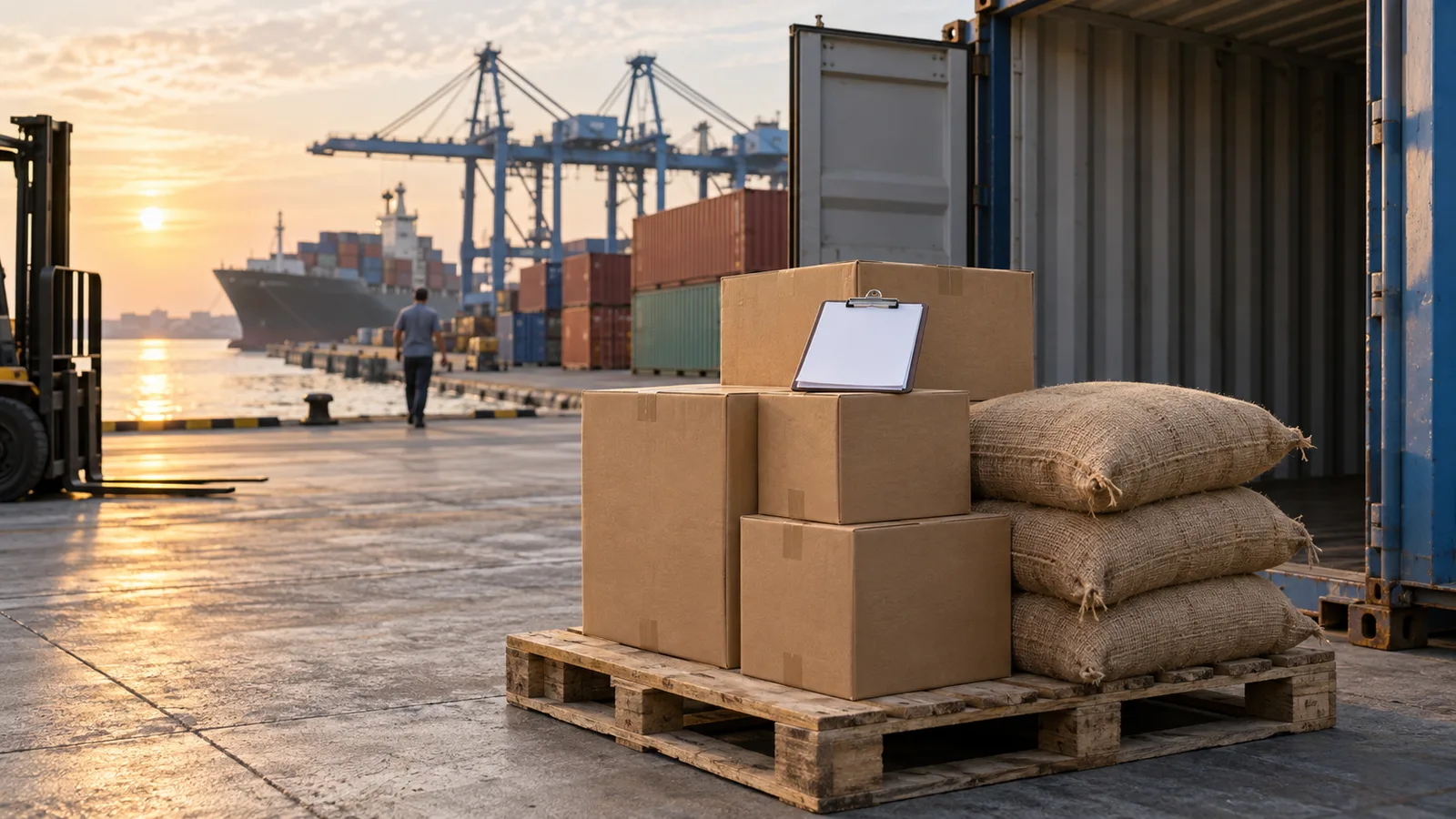
To import from Sri Lanka you agree a specification and a pro-forma invoice with the supplier, choose a payment method and an Incoterms rule, and name every certificate your market needs before the goods are packed. The supplier then makes the Sri Lankan export declaration, known as the CUSDEC, and collects each paper from the office that issues it. You, or your customs broker, clear the cargo at your own port.
Specification, sample and tariff code come before price
A quote is only as exact as the enquiry behind it. Put the product, its grade or cut, the quantity, the pack type, the destination port and the certificates your authorities require on one page. If you buy wholesale from Sri Lanka across several lines, write one page per product: whole and ground spices, coconut products, Ceylon tea and packaged foods and beverages do not travel with the same papers.
Ask for a sample before you discuss volume. The export procedure guide published by Sri Lanka's Export Development Board (EDB) in 2020 says trade samples are usually sent by airmail, and that samples below a value limit stated in the guide can be exported freely with only a customs declaration form. Keep your test result as the reference for the shipment.
Add your tariff code. Sri Lanka's Department of Commerce explains that the first six digits of an HS code, the customs classification number, are agreed by all countries, while national tariff lines of eight to ten digits can differ. Get your national line from your broker and send it with the product description.
Read the pro-forma invoice as a contract draft
Once the sample is approved, ask for a pro-forma invoice: the supplier's offer, laid out like an invoice. The EDB guide says the exporter prepares it for the buyer and that it states the product description, quantity, price, terms of payment, terms of delivery and packing and marking details. Whatever is missing from it has not been agreed.
Packing belongs in that document. The guide suggests writing packaging specifications into the contract to avoid disputes, and says packages should carry the shipping marks and the port of destination. Ask what the pallets and crates are made of: wood packaging in international trade must be treated under ISPM 15, the International Plant Protection Convention's standard for wood packaging material.
Payment method and Incoterms rule
The EDB's answers to exporters' frequently asked questions list five payment methods: advance payment, letters of credit, documentary collection, open account and consignment. The Board says advance payment is the most favoured method for exports, so a first-time buyer should be ready to discuss it.
It describes a letter of credit as a written undertaking by a bank to pay the seller up to a stated sum within a prescribed time limit against stipulated documents. In a documentary collection your bank releases the shipping documents after you pay (documents against payment, D/P) or after you accept a term bill (documents against acceptance, D/A). Either way, agree the list of documents and their wording before the goods are packed.
The delivery term is written as one of the eleven Incoterms rules of the International Chamber of Commerce. Four Incoterms 2020 rules are for sea and inland waterway transport only: FAS (Free Alongside Ship), FOB (Free on Board), CFR (Cost and Freight) and CIF (Cost Insurance and Freight). Seven others, EXW, FCA, CPT, CIP, DAP, DPU and DDP, can be used for any mode of transport, so air cargo goes on one of those.
The EDB guide says the seller clears the goods for export under FOB, CFR and CIF, pays the cost and freight to the named port of destination under CFR and CIF, and must also procure marine insurance under CIF. The Chamber notes that the default cover for CIF remains Institute Cargo Clauses (C), while CIP (Carriage and Insurance Paid To) requires the higher Institute Cargo Clauses (A). Ask which cover a quote assumes.
For the full list of eleven rules, the seven that work for air cargo and the two changes made in the 2020 edition, read Incoterms 2020 explained for importers.
What the supplier files in Sri Lanka, so you do not have to
The CUSDEC. Section 57 of the Customs Ordinance requires a declaration to Customs for every export. The Sri Lanka Customs guidance on exporting goods says it should be submitted before the goods are exported, that the declarant can be a Customs House Agent or the exporter, and that the export should be effected within 30 days of the declaration's registration date. The commercial invoice and the packing list are filed with it, so send corrections to names, quantities and marks before that point.
Licences and levies. The EDB says most goods can be exported freely, but certain goods need an export licence issued by the Controller of Imports and Exports. Sri Lanka Customs says a few commodities are liable for export levies, depending on the commodity and the HS code. Ask whether either applies to your product.
Vessel and bill of lading. The exporter reserves sea cargo space with the shipping agent well ahead of the shipment date. After loading, the shipping note becomes the mate's receipt when the captain of the vessel signs it, and the exporter gives that receipt to the shipping agent to obtain the bill of lading (B/L).
Certificates are issued on request, by different offices
The EDB guide says a quality certificate, health certificate, phytosanitary certificate, fumigation certificate, HACCP certification for food items and other certificates or test reports should be submitted when the buyer requests them. A paper you did not order may not exist when the vessel sails.
| Product | What to ask about | Office named in the official guidance |
|---|---|---|
| Plant products | Phytosanitary (plant health) certificate | National Plant Quarantine Service |
| Food items | Health certificate | Food Control Administration Unit, Ministry of Health |
| Desiccated coconut | Certificate that must accompany each export shipment | Coconut Development Authority |
| Tea | Consignment inspection and authorisation to export | Sri Lanka Tea Board |
| Organic products | Organic certificate, for example EU, USDA-NOP or JAS | An accredited certification body |
| Herbal finished products | Product approval before export | Drug Formulatory Committee under the Department of Ayurveda |
The National Plant Quarantine Service says the phytosanitary certificate is issued after plant quarantine officers inspect and sample the goods, and should be issued before dispatch. It asks the exporter for a packing list with correct botanical names, so put the botanical name your authority expects in your order.
The Food Control Administration Unit says different countries request different parameters in a health certificate and advises exporters to check them with the importing agent before exporting. That agent is you: send the parameters your authority wants tested.
Certificate of origin: say which kind you need
Proof of origin is what a tariff preference rests on, and in Sri Lanka it takes three forms.
- Preferential certificate of origin. Issued by the Department of Commerce under GSP schemes (tariff preference schemes), free trade agreements and multilateral trading agreements.
- Ordinary certificate of origin. Issued by chambers such as the Ceylon Chamber of Commerce or the National Chamber of Commerce.
- Statement on Origin. For the EU, Norway, Switzerland and Turkey the Department's certificate no longer applies. Under the Registered Exporter (REX) system the exporter writes the statement on the invoice or another commercial document, with a registration number beginning LKREX.
The EU's Access2Markets portal lists Sri Lanka among the eight GSP+ beneficiary countries, and the UK lists it under Enhanced Preferences in its Developing Countries Trading Scheme. Whether your product and its origin qualify is a question for your customs broker; ask the supplier to state the country of origin of each item on the quote.
Your side of the order: clearance at destination
Import clearance is the buyer's work, under your country's rules. In the United States, the Food and Drug Administration says food can be imported without its prior sanction as long as the facilities that produce, store or handle it are registered with the agency and prior notice of incoming shipments is provided. In the EU, organic products are not released from the port of arrival without an electronic certificate of inspection. Rules change, so confirm yours with your customs broker or on the authority's own page before you order.
A first order in eight steps
- Check your own import rules. Ask your customs broker which certificates, registrations and tariff line apply.
- Send a written enquiry. Give the product, grade, quantity, pack type, destination port, HS code and certificates through the How to order page.
- Approve a sample. Test it against your specification and file the result.
- Agree the pro-forma invoice. Check every line against your enquiry, including packing and marking.
- Fix the payment method and the Incoterms rule. Name the port or place, and use an any-mode rule if the goods fly.
- Order every certificate in writing before packing. Include botanical names, test parameters and the kind of origin proof.
- Let the supplier export. The CUSDEC and the vessel booking are the exporter's tasks.
- Check the document set, then clear. The EDB guide's list of shipping documents sent to the bank includes the commercial invoice, the original bill of lading or airway bill, the certificate of origin and the packing list. Compare each with the contract.
Common mistakes
- Asking for "the usual certificates". Each paper is supplied on request, so name each one.
- Requesting a certificate after loading. The phytosanitary certificate follows inspection and sampling and should be issued before dispatch.
- Using one word for three kinds of origin proof. A Department of Commerce certificate, a chamber certificate and a Statement on Origin are different documents.
- Copying the supplier's tariff code onto your import entry. Only the first six digits are agreed between countries.
- Leaving the test parameters to the supplier. The food control unit advises exporters to check the parameters with the importing agent, so send them unprompted.
Frequently asked questions
Do I have to register with a Sri Lankan authority to buy from a Sri Lankan exporter?
The registrations in the Export Development Board's export procedure guide, with the Inland Revenue Department and Sri Lanka Customs, apply to the person exporting. As the buyer you hold whatever registrations your own country asks of an importer.
How long does a supplier have to ship after the CUSDEC is registered?
Sri Lanka Customs says the export should be effected within 30 days from the date the customs declaration is registered, and that the declaration should be submitted before the goods are exported.
Is a Sri Lankan certificate of origin still used for shipments to the EU?
For the EU, Norway, Switzerland and Turkey the Department of Commerce certificate of origin no longer applies. Under the Registered Exporter (REX) system the exporter makes a Statement on Origin on the invoice or another commercial document.
Who issues the health certificate for food exported from Sri Lanka?
The Food Control Administration Unit of the Ministry of Health issues it, and only to establishments registered with the Unit. Fresh vegetables and fruits are certified by the Plant Quarantine Unit of the Department of Agriculture instead.
When your specification, HS code and certificate list are ready, request a quote from Truly Ceylon through the How to order page and ask which of the papers in this guide would travel with the goods. The product catalogue shows the ranges you can enquire about.
Key takeaways
- Fix the specification, sample, tariff code and certificate list before you ask for a price.
- Treat the pro-forma invoice as the contract draft: payment terms, delivery terms, packing and marking.
- The supplier files the CUSDEC and should ship within 30 days of its registration; you clear the goods at destination.
- Certificates come from different offices and are supplied when the buyer requests them.
- FAS, FOB, CFR and CIF are sea-only rules; air cargo goes on an any-mode rule.
Sourcing from Sri Lanka?
Send us the product, quantity, packing and destination port for a written quotation.