Import food from Sri Lanka to the USA: which FDA step is the supplier's, and which is yours?
Truly Ceylon export team ·
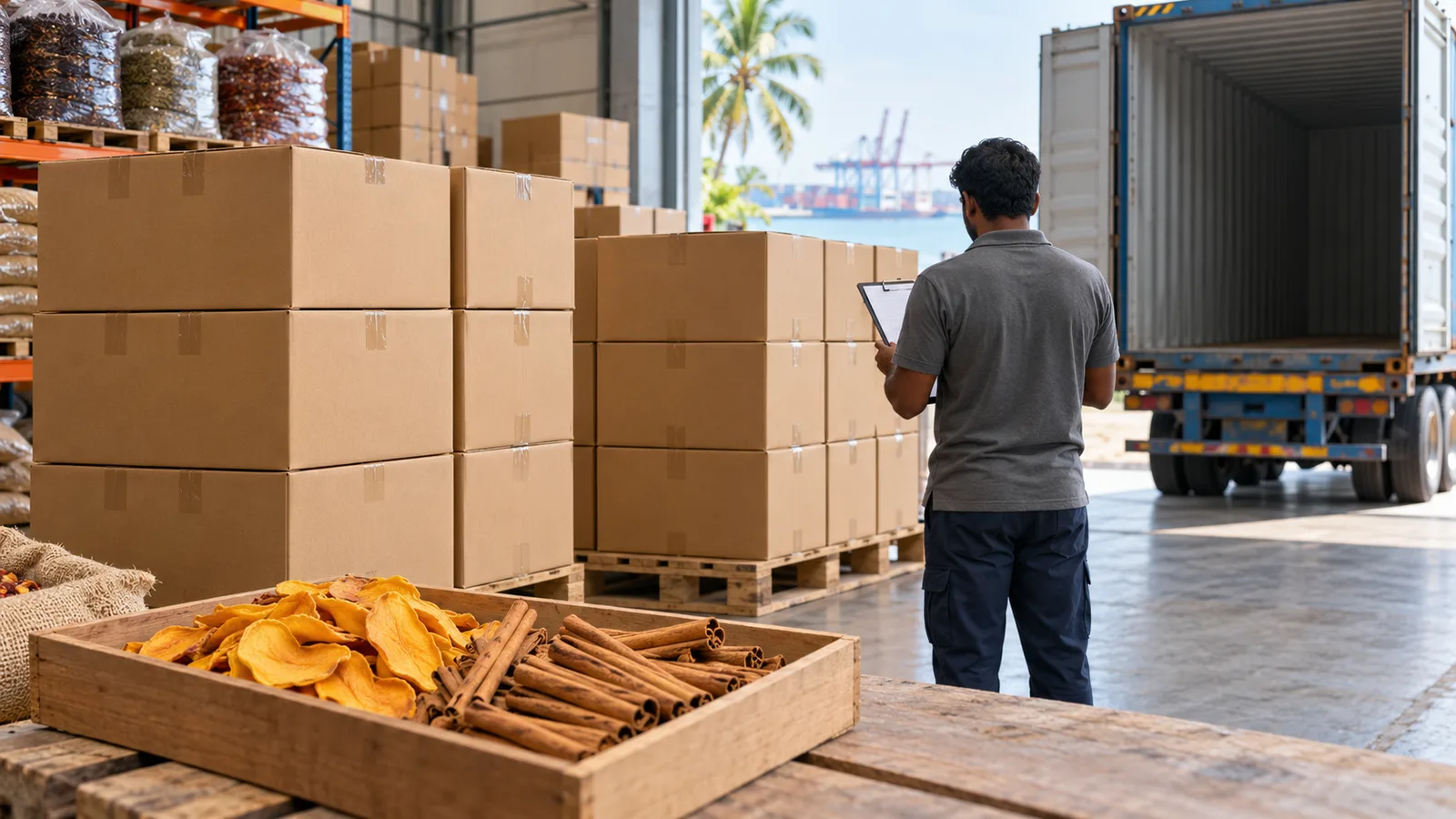
To import food from Sri Lanka to the USA, you do not need an FDA approval for the product, and there is none to ask for. What you need is three things done by the right party: the Sri Lankan facility that makes, packs or stores the food is registered with the FDA, someone files prior notice of each shipment before it arrives, and you, as the US importer, follow a written Foreign Supplier Verification Program (FSVP) for that food. Get those three right and you have covered the FDA side of the order; get one wrong and the lot can be held at the port.
This guide splits the work between supplier, filer and importer. It covers the FDA rules for food; US duty and tariff questions belong with your customs broker.
What the FDA does not do for imported food
The FDA says it is not authorised to approve, certify, license or otherwise sanction individual food importers, products, labels or shipments. An offer for "FDA-approved" spice or tea uses words the FDA does not use for food.
What the agency does instead is set conditions. Food can be imported without prior FDA sanction as long as the facilities that produce, store or handle it are registered and prior notice of the shipment is provided. The FDA page on importing food products into the United States also says imported food must meet the same legal requirements as food produced in the US, that it is subject to inspection at US ports of entry, and that shipments not in compliance may be detained.
So ask a supplier which of its facilities are registered, not whether the product is "FDA approved".
Who does what: facility, filer and importer
Each FDA requirement sits with a different party. The table shows where each one falls on a typical Sri Lankan food order.
| FDA requirement | Who it falls on | When | What to ask for or check |
|---|---|---|---|
| Food facility registration | Each facility that manufactures, processes, packs or holds the food | Before the food is shipped; renewed every other year | Confirmation that the facility handling your product is registered and current |
| Prior notice | Filed through CBP's ABI/ACE or the FDA's Prior Notice System Interface (PNSI) | Confirmed before arrival: at least 8 hours ahead by sea, 4 hours by air | Who files it, and the shipment details they need from the supplier |
| Foreign Supplier Verification Program | The US importer: the US owner or consignee of the food | Before importing; re-evaluated at least every three years | The supplier's food safety records, test reports and access for audits |
| Compliance at the port | The food itself, held to US legal requirements | On arrival | Labelling and specification agreed before packing |
Facility registration: the Sri Lankan side
Facilities engaged in manufacturing, processing, packing or holding food for consumption in the United States must register with the FDA and renew that registration every other year, as the FDA's food facility registration page sets out. For a Sri Lankan order that can mean more than one site: the factory that grinds the turmeric and a separate warehouse that holds the packed cartons before shipment are both handling the food.
Three points from the FDA cut through a lot of confusion:
- There is no fee to register a food facility with the FDA.
- A facility is not required to use a third-party business or "registrar" to register.
- A U.S. Agent may charge a fee for its services; that is a private arrangement, not an FDA charge.
If a supplier quotes an "FDA registration fee" as part of the price, ask what it actually pays for. A registration does not replace the specification and test reports you would ask for on any food order. Our guide on which Sri Lankan registration proves what explains how to check the exporter itself on the Sri Lankan side.
Prior notice: timing that decides the sailing
Prior notice must be given to the FDA for all food for humans and animals imported or offered for import into the United States. It is submitted either through US Customs and Border Protection's ABI/ACE interface or the FDA's Prior Notice System Interface (PNSI), as the FDA's prior notice filing page explains.
The timing rules in FDA guidance are short and strict. Prior notice must be confirmed by the FDA no less than:
- 8 hours before arrival by water, which covers a container from Colombo;
- 4 hours before arrival by air or by rail;
- 2 hours before arrival by road.
There is also an outer limit. Prior notice may not be submitted more than 15 calendar days before the anticipated arrival date through PNSI, or more than 30 calendar days before through ABI/ACE. On a sea shipment the filer therefore files late in the voyage, with the final shipment details to hand.
If your customs broker files, it needs the commercial invoice, packing list and facility details from Sri Lanka in good time. Our checklist of export documents from Sri Lanka shows which of those papers come as standard and which you must ask for.
FSVP: the importer's own written plan
Under the FDA's Foreign Supplier Verification Programs rule, the importer is the US owner or consignee of the food. That importer must develop, maintain and follow an FSVP for each food it brings in, and re-evaluate it at least every three years.
The program rests on a hazard analysis of each food. Based on that analysis, the verification activities the FDA lists include annual on-site audits of the supplier's facility, sampling and testing, and a review of the supplier's relevant food safety records. The plan for cinnamon quills and the plan for dehydrated mango will not look the same.
This is where the Sri Lankan supplier matters most. Your FSVP can only be as good as the records you can get, so ask before the first order:
- which food safety records the supplier can share for your product;
- whether it will accept an audit of the facility, by you or someone acting for you;
- which laboratory tests the lot, and what each report covers.
On the Sri Lankan side, the Food Control Administration Unit (FCAU) of the Ministry of Health issues export health certificates for tea, coconut products, rice and rice-based products, cereals, spices and condiments and processed foods, only to establishments registered with it and after a factory inspection. The FCAU says different countries request different parameters in the health certificate. Tell the supplier which parameters your FSVP needs. Our list of questions to ask a food supplier before ordering turns this into a short enquiry checklist.
Food or dietary supplement: decide before you order
Herbal powders and leaf teas sit close to a line US rules treat seriously. The FDA regulates dietary supplements under a different set of regulations from conventional foods. Under the Dietary Supplement Health and Education Act (DSHEA) of 1994, the FDA does not approve supplements before they are marketed; manufacturers and distributors are responsible for their safety and labelling.
The FDA also says a product represented as being for a specific disease is treated as a drug, not a dietary supplement, so your label decides which rules apply. Our post on whether moringa leaf powder is imported as a food or a supplement works through one example.
How to set up a first food order from Sri Lanka to the USA
- Name the product exactly: the form (whole, ground, dried, oil), any grade, and the HS code you will declare. Browse the food, feed and beverage category or the Sri Lankan spices range to match product names to your list.
- Decide whether the product will be sold as a conventional food or a dietary supplement, and plan the label for that route.
- Ask the supplier to confirm that every facility that processes, packs or holds your goods is registered with the FDA and current.
- Write your hazard analysis and FSVP for the food, and list the records, tests and audit access you need from the supplier.
- Agree the Incoterm and who arranges freight; our guide to which Incoterms 2020 rule fits sea or air cargo helps here.
- Agree who files prior notice, and make sure the filer gets the final shipment details in time for the 8-hour sea or 4-hour air deadline.
- Keep the FSVP records and re-evaluate the plan at least every three years.
Common mistakes
- Asking for an "FDA approval certificate". The FDA does not approve individual foods, so no such paper exists. Ask for facility registration details and the test reports your FSVP needs instead.
- Checking only the factory. A separate warehouse or packer that holds the food before shipment also has to be registered.
- Paying a "registration fee" without asking what it covers. The FDA charges none, and no registrar is required.
- Filing prior notice too early or too late. PNSI will not take it more than 15 days ahead, ABI/ACE not more than 30, and on a sea shipment it must be confirmed at least 8 hours before arrival.
- Treating the FSVP as the supplier's job. The rule places it on the US owner or consignee.
Frequently asked questions
Does food from Sri Lanka need FDA approval before it can be sold in the USA?
No. The FDA says it is not authorised to approve, certify or license individual food products, labels or shipments. It must still meet the same legal requirements as US-made food.
Who registers the Sri Lankan facility with the FDA, and what does it cost?
Each facility that manufactures, processes, packs or holds the food registers and renews every other year. The FDA charges no fee and does not require a third-party registrar. A U.S. Agent may charge for its own services.
When must prior notice be filed for a sea shipment from Colombo?
The FDA must confirm it at least 8 hours before the vessel arrives. It cannot be submitted more than 15 calendar days before arrival through PNSI, or more than 30 calendar days through ABI/ACE.
Who counts as the importer under the FSVP rule?
The US owner or consignee of the food. That party must develop, maintain and follow an FSVP for each food it imports and re-evaluate it at least every three years. The supplier provides the records the plan relies on.
What can I ask a Sri Lankan supplier for to support my FSVP?
Ask for the supplier's relevant food safety records, the laboratory reports for your lot, and whether it accepts on-site audits. For tea, spices, coconut products and processed foods, you can also ask for an FCAU export health certificate with the parameters your plan needs.
Once your product list, HS codes and document needs are ready, send them through our how to order page and ask for the facility registration details and the reports your FSVP needs to be named in the quotation. Buying for several markets? Compare them in our overview of how Sri Lankan food import rules differ by destination, and confirm the current FDA position for your product with your customs broker.
Key takeaways
- The FDA does not approve individual foods.
- Every Sri Lankan facility that processes, packs or holds your food must be registered, with no FDA fee and no registrar needed.
- Prior notice must be confirmed at least 8 hours before arrival by sea and 4 hours by air.
- The FSVP is the US importer's duty; ask the supplier early for records, tests and audit access.
- Decide food or dietary supplement before you order.
Sourcing from Sri Lanka?
Send us the product, quantity, packing and destination port for a written quotation.